Quick answer
FUT hair transplant (follicular unit transplantation), or the strip method, removes a thin strip of scalp from the back and divides it into grafts for thinning areas. In Lahore it is performed by FCPS plastic surgeon Dr. Junaid Fateh. It takes 4 to 8 hours under local anaesthetic and sedation, and recovery takes 10 to 14 days. Results are usually permanent. Cost is confirmed after consultation.
Also known as: Follicular unit transplantation, Strip method hair transplant, Strip harvesting, FUSS (follicular unit strip surgery), Strip hair transplant, Baal lagwana, Ganjapan ka ilaj · ایف یو ٹی ہیئر ٹرانسپلانٹ
About FUT hair transplant
FUT, or follicular unit transplantation, is often called the strip method. A narrow strip of hair-bearing skin is removed from the back of the scalp and the wound is stitched closed. The strip is then divided under magnification into individual follicular units, and these grafts are placed into the thinning areas in much the same way as in FUE.
The main strength of FUT is efficiency. Because the grafts come from one concentrated area, a large number can often be obtained in a single session while the rest of the donor zone is left alone. That makes it a practical choice if your hair loss is more advanced, or if you would like to keep the wider donor area in reserve for FUE in the future.
The trade-off is a linear scar across the back of the head. In most people it heals as a fine line that is covered by hair of moderate length. Scars do vary from person to person, though, and one may show if you later decide to keep your hair very short.
How Dr. Junaid approaches FUT hair transplant
As a plastic surgeon, Dr. Junaid Fateh pays close attention to how the donor wound is planned and closed, because the quality of the scar matters as much as the grafts. At consultation he checks the looseness of your scalp, the density at the back of your head and how you like to wear your hair. If your scalp is tight or you prefer very short styles, he will tell you plainly that FUE may suit you better.
He takes only as wide a strip as your scalp can close comfortably, which reduces tension on the wound and helps the scar heal flat. Your new hairline is designed with you beforehand, with natural irregularity at the front and grafts angled to follow your own hair direction. He also plans ahead, so that the grafts used now still look right if your hair loss progresses.
Like any surgery, FUT carries risks. Dr. Junaid goes through them with you at consultation, including a wider or stretched scar, numbness or tightness at the back of the head that usually settles, infection, swelling and uneven growth.
Techniques and options
Options Dr. Junaid may recommend include:
- Single-strip harvest: one carefully measured strip from the safe donor zone, which is usually the densest part of the scalp.
- Graft dissection under magnification: the strip is divided into one-, two- and three-hair units, with fine singles reserved for the hairline.
- Trichophytic closure: a closure technique that lets hair grow through the edge of the scar, which can help it blend in.
- Repeat FUT through an old scar: if you have had FUT before, the previous scar can often be included in the new strip so you are left with one line.
- FUT combined with FUE: where a very large number of grafts is needed, both methods may be used to make the most of the donor area.
What to expect on the day
Once the hairline is agreed, the back of your scalp is numbed and the strip is removed and closed. You can rest while the team prepares the grafts. Placement into the thinning area takes most of the day. A light sedative may be offered to help you relax, and you go home the same day with a dressing and written aftercare instructions.
Before & after
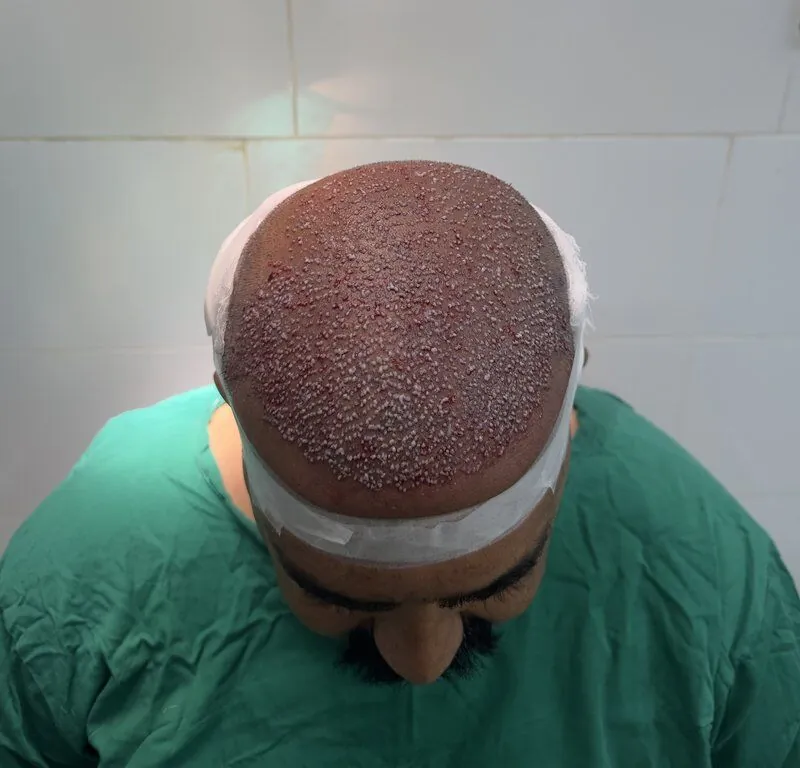
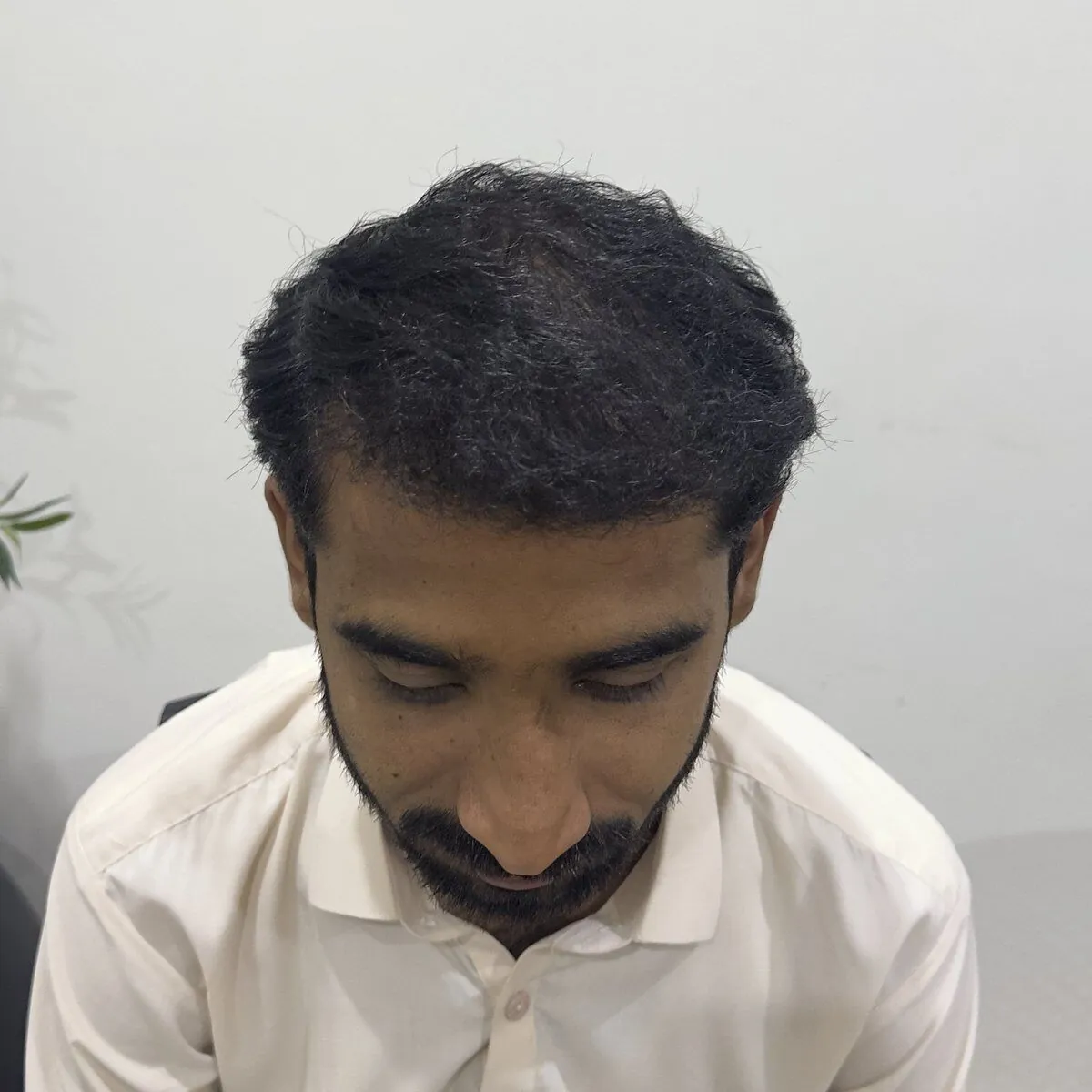
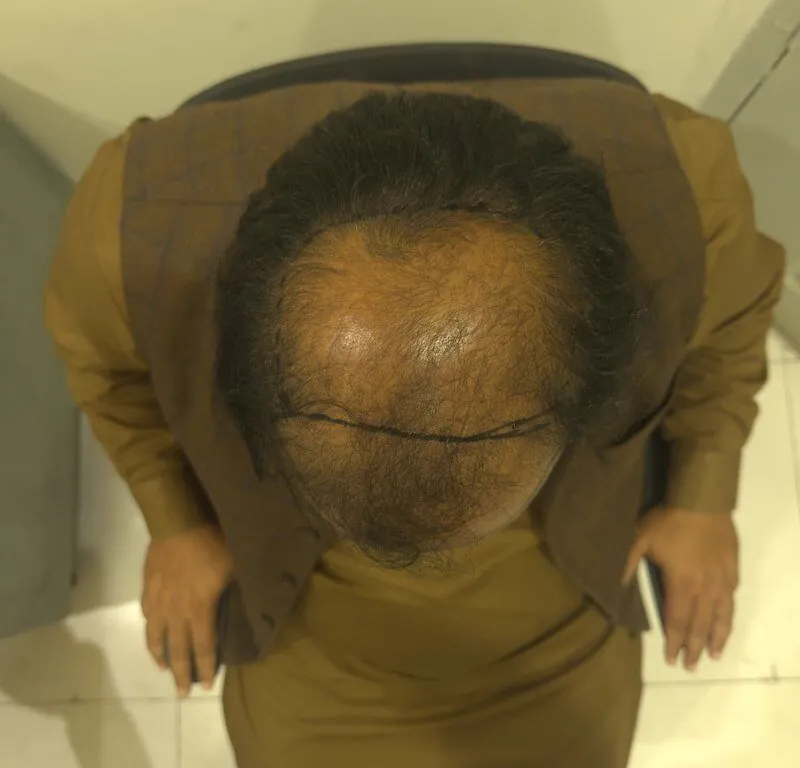 Before
After
Photos are shared with patient consent. Results vary from person to person. See more results
Benefits of FUT Hair Transplant
High Graft Yield
A large number of grafts can often be taken in one session to cover wider areas of loss.
Donor Reserve Kept
The rest of the donor area is left untouched, which keeps FUE open as an option later.
Carefully Prepared Grafts
The strip is divided under magnification, so fine single hairs can be saved for the hairline.
Planned Scar Closure
Strip width and wound closure are planned by a plastic surgeon to help the scar heal fine.
Little Visible Shaving
Only the strip itself is trimmed, so the longer hair above it covers the donor site from day one.
Long-Term Growth
Hair from the donor zone is usually resistant to pattern thinning and keeps growing in its new place.
Are you a good candidate?
FUT may be a good fit if you:
- Have moderate to advanced hair loss and need a larger number of grafts
- Usually keep your hair long enough to cover a fine scar
- Have a reasonably loose scalp and good density at the back of the head
- Would prefer not to shave the whole donor area for surgery
- Have had FUT before and would like more grafts from the same area
- Are in good general health and have a hair loss pattern that has largely settled
If you like very short haircuts or your scalp is tight, Dr. Junaid will usually talk you through FUE instead.
Recovery & aftercare
With FUT you are healing in two places, the strip site and the grafted area. A typical course looks like this:
- Days 1–3
The back of the head feels tight and sore, and the forehead may swell. Sleep with your head raised and take the pain relief prescribed.
- Week 1
Light daily activity is fine. Avoid bending your head far forward or lifting heavy weights, which can strain the wound.
- Days 10–14
Stitches are removed unless dissolving ones were used, and crusts in the grafted area have mostly cleared.
- Weeks 2–6
Transplanted hairs shed as expected. Numbness or tightness around the scar usually eases over the following weeks to months.
- Months 3–12
New growth appears and steadily thickens, with the final result usually seen at 12–18 months.
Avoid heavy gym work, contact sport and swimming for as long as the team advises, as this helps the scar stay as fine as possible.
What patients say
Dr. Junaid recommended FUT for maximum density and he was right. Six months post-op and my hair looks thicker than ever. Outstanding work.
Related articles
 Hair Restoration
Hair Transplant Cost in Pakistan: What Affects the Price
What decides the cost of a hair transplant in Pakistan: graft count, technique, who does the work, facility and aftercare, plus red flags in...
 Hair Restoration
FUE vs FUT Hair Transplant: Which Method Is Right for You?
FUE or FUT? Dr. Junaid Fateh explains how each hair transplant method works, the scars and recovery involved, and who tends to suit which...
Hair Restoration
Hair Transplant Side Effects and How to Reduce Them
Swelling, scabs, numbness, shock loss and folliculitis after a hair transplant: what is normal, how to reduce side effects and when to...
FUT Hair Transplant FAQs
What is the difference between FUT and FUE?
Both move the same kind of grafts. FUT removes a strip of skin and divides it, which leaves a linear scar but can give a large number of grafts in one session. FUE takes grafts one by one, leaving tiny dot marks instead of a line. Dr. Junaid recommends one or the other based on your scalp, your hair loss and the way you wear your hair.
Will people be able to see the FUT scar?
In most people the scar heals as a fine line at the back of the head that is hidden by hair of moderate length. Healing varies, and some people form a wider scar. If you plan to keep a very short cut, raise this at consultation so it can be factored into the choice of method.
How much does FUT cost in Lahore?
The price depends on the number of grafts, the size of the area being treated, how complex the plan is and any additional treatment. A personalised quote follows your consultation, and you can read more about what shapes the price in the cost guide.
Is FUT painful?
Surgery is done under local anaesthetic, with light sedation if needed, so you should not feel sharp pain. The strip site is usually sore and tight for several days afterwards, and the team prescribes pain relief to keep you comfortable.
How long do FUT results last?
The grafts come from the donor zone, where hair is largely protected from pattern baldness, so they tend to keep growing for the long term. Hair that was not transplanted may still thin over time, and results vary between people.
How much time off work do I need?
Many people return to desk work after about a week, once the first soreness has eased. Physical jobs may need closer to two weeks, and heavy lifting should wait until the wound has healed well.
Can I have an online consultation from abroad?
Yes. Take photos of your hairline, the top and crown, and the back of your scalp, share them on WhatsApp and arrange a video call. Dr. Junaid can tell you whether FUT looks suitable, and the final plan is confirmed in person after he has examined you.
Can I have FUE later if I have FUT now?
Usually, yes. FUT leaves the rest of the donor area untouched, so FUE can often be used later to add density or to place hair into the scar to soften its appearance.
What are the risks or side effects of FUT hair transplant?
Most people have soreness and tightness at the back of the head, some forehead swelling and numbness around the scar, which usually settle over weeks to months. Less common risks include infection, a wider or stretched scar, temporary shedding of existing hair and uneven growth. Dr. Junaid reduces these risks by checking how loose your scalp is, taking only as wide a strip as closes comfortably and giving clear aftercare, and he goes through them with you at consultation.
When will I see the final results of FUT hair transplant?
Transplanted hairs usually shed between two and six weeks after surgery, then new growth starts to appear from around three months. Visible growth is expected at 6 to 12 months, and the final result is usually seen at 12 to 18 months. The scar at the back also tends to soften and fade over this time. Results vary between people.
What is the best age for FUT hair transplant?
There is no fixed age, but FUT is usually planned once your hair loss pattern has largely settled, which for many men is from the mid-twenties or later. Because FUT is often chosen for more advanced loss, Dr. Junaid looks at how far your hair loss is likely to progress before deciding how many grafts to use now. Younger patients with early thinning are usually advised to try medical treatment first.
Roman Urdu mein maloomat (ایف یو ٹی ہیئر ٹرانسپلانٹ)
FUT ya strip method mein sar ke peeche se jild ki ek patli patti nikal kar grafts tayyar kiye jate hain aur unhein ganjapan wali jagah par lagaya jata hai. Yeh tareeqa zyada ganjapan aur lambe baal rakhne walon ke liye munasib ho sakta hai. Dr. Junaid Fateh Lahore mein yeh procedure karte hain. Mashware ke liye WhatsApp par rabta karein.
WhatsApp par mashwara book karein