Quick answer
Chin reshaping alters chin size or shape with an implant, bone repositioning (genioplasty) or filler to balance your profile. In Lahore it is performed by FCPS plastic surgeon Dr. Junaid Fateh. Surgery takes 1 to 2 hours as a day case under general anaesthesia or local with sedation, with 1 to 2 weeks off. Implant and bone results are permanent; filler is temporary. Cost depends on your plan and is confirmed after consultation.
Also known as: Chin augmentation, Chin implant, Genioplasty, Mentoplasty, Chin surgery, Chin reduction, Thodi ki surgery, Thodi ka implant · ٹھوڑی کی سرجری
About chin reshaping
The chin is easy to overlook, yet it anchors the lower face. A chin that sits too far back can make the nose look larger, the neck look softer and the profile look unfinished. A chin that is too long or too prominent can dominate the face instead. Small changes in its size and position often create a surprisingly large improvement in overall balance.
Chin reshaping, also called mentoplasty, covers several different procedures. The chin can be brought forward with an implant, moved by repositioning the bone (genioplasty), reduced, or enhanced temporarily with filler. Dr. Junaid Fateh, who practises plastic and cosmetic surgery in Lahore, offers each of these, and choosing between them is a big part of your consultation.
Both men and women ask about chin reshaping. Men often want a stronger, squarer jawline, while women more often want a softer, well-defined chin that balances the lips and nose.
How Dr. Junaid approaches chin reshaping
Dr. Junaid looks at your face as a whole. He studies your profile, the relationship between your nose, lips and chin, the length of your lower face and the symmetry of your jaw. He also checks your bite and teeth, because a chin that looks weak is sometimes part of a jaw that sits back, which needs a different solution.
Photographs help you both see the profile clearly and agree a realistic goal. The aim is a chin that suits your features and looks as if it belongs to you, not one that seems added on. In some cases he may suggest trying filler first, so you can see how a change in projection feels before committing to surgery.
Safety is central. Your general health, oral hygiene and smoking history are reviewed, and the operation is planned to protect the nerves that give feeling to the lower lip and chin. Like any surgery, chin reshaping has risks, including infection, implant movement, asymmetry, numbness that is usually temporary and the chance that a later adjustment is needed. Dr. Junaid discusses each of these openly before you commit.
Techniques and options
Options Dr. Junaid may discuss with you include:
- Chin implant: A shaped medical-grade implant is placed over the chin bone through a small incision inside the lower lip or under the chin, increasing forward projection.
- Sliding genioplasty: The lower edge of the chin bone is cut, moved forward, back, up, down or sideways, and fixed in its new position. It suits larger or more complex changes.
- Chin reduction: Bone is reshaped or repositioned to reduce a chin that is too long or too prominent.
- Combined profile surgery: Chin work can be paired with rhinoplasty, or with liposuction under the chin to sharpen the jawline.
- Non-surgical chin enhancement: Dermal filler adds projection and definition without surgery. The effect is temporary and needs top-ups.
What to expect on the day
Expect to spend one to two hours in theatre. Depending on the technique, you will either be fully asleep or relaxed under sedation with local anaesthetic. It is normally a day case, and you leave with a supportive dressing, advice on a soft diet, and instructions for keeping your mouth clean while the incision heals.
Before & after
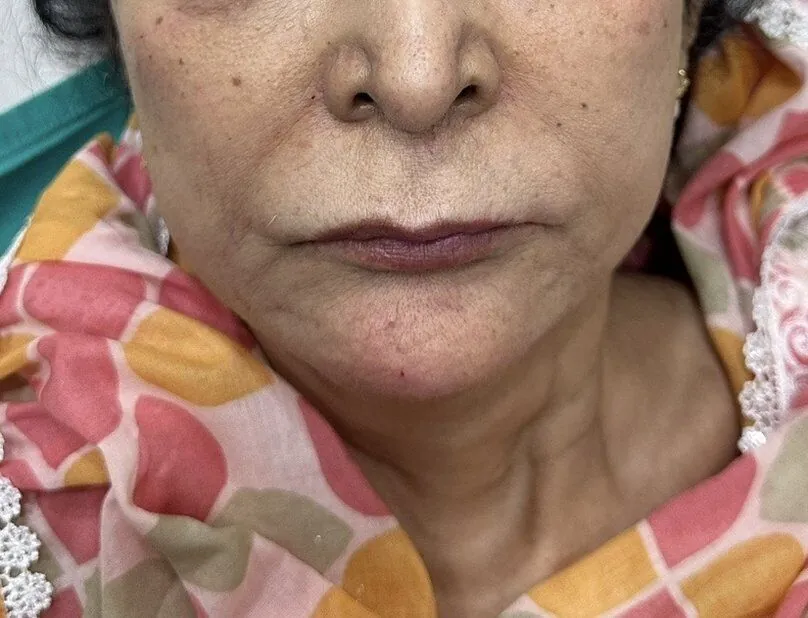
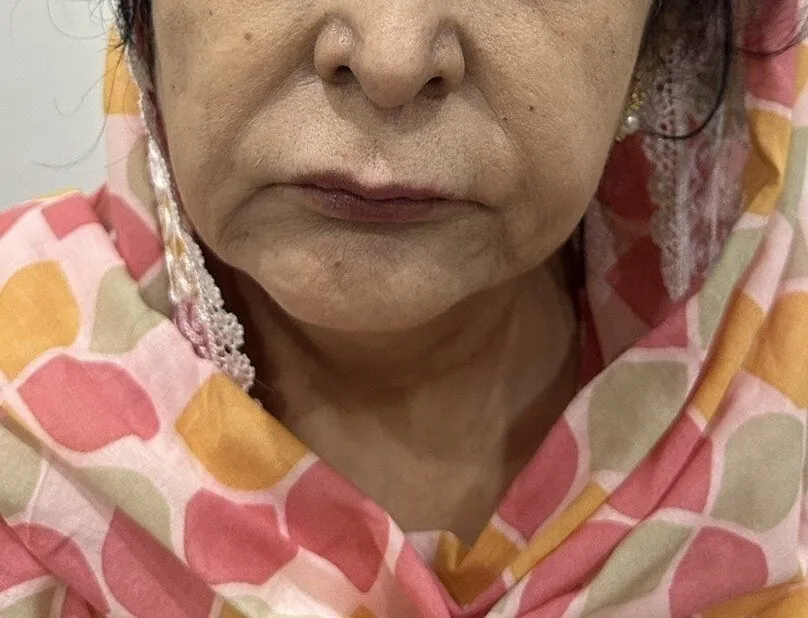 Before
After
Photos are shared with patient consent. Results vary from person to person. See more results
Benefits of Chin Reshaping
A better balanced profile
Bringing the chin into line with your lips and nose can make your whole side view look more harmonious.
A clearer jawline
A stronger chin can sharpen the angle between the jaw and the neck.
Works well with rhinoplasty
A small chin can make the nose look bigger, so treating both together often gives a more balanced result.
Hidden incisions
Most chin surgery is done through the inside of the lower lip or a small cut in the crease beneath the chin.
A long-term change
Implants and bone repositioning give a lasting result, unlike filler, which slowly wears off.
Options for every goal
From temporary filler to surgery, the approach is matched to how much change you want.
Are you a good candidate?
Chin reshaping may suit you if you:
- Feel your chin is small or set back, making your profile look weak
- Have a chin that is too long or too prominent for the rest of your face
- Have a chin that looks off-centre or uneven
- Are planning rhinoplasty and would like your profile assessed as a whole
- Have finished facial growth, which is usually by the late teens
- Have healthy teeth and gums, as many incisions are made inside the lower lip
- Are in good general health and do not smoke
If your bite is clearly out of line, the jaw itself may be the real issue. Dr. Junaid checks your bite and will explain if jaw or orthodontic treatment should come first.
Recovery & aftercare
Recovery depends on the technique used. For most people it runs roughly as follows:
- Days 1–3
Your chin feels tight, swollen and numb, and supportive tape or a strap may be worn. Stick to soft foods and rinse your mouth after meals if the incision is inside the lip.
- First week
Most discomfort eases. Any external stitches are removed, and people with desk-based jobs are often back towards the end of the week.
- Weeks 2–3
Swelling keeps falling and you look presentable socially. Avoid knocks to the chin and strenuous exercise.
- Months 1–3
Any numbness of the lower lip and chin usually improves gradually, and normal activities resume.
- Months 3–6
The last of the swelling fades and the final contour of your chin and jawline becomes clear.
Bone repositioning (genioplasty) usually takes a little longer to settle than an implant, so Dr. Junaid tailors your aftercare to the procedure you have.
What patients say
Chin implant by Dr. Junaid completely balanced my facial profile. He has an incredible eye for facial proportions and aesthetics.
Chin Reshaping FAQs
How much does chin reshaping cost in Lahore?
The cost depends on the approach, whether that is an implant, genioplasty, reduction or filler, along with the anaesthesia and whether it is combined with rhinoplasty or another procedure. You receive a personalised quote from Dr. Junaid once your plan is agreed at consultation. See the cost guide for a fuller explanation of what affects pricing.
Is chin surgery painful?
You are comfortable during the operation under anaesthesia. For the first few days the chin feels tight and sore, and chewing can be uncomfortable, which is why soft foods help. Prescribed painkillers usually keep this well under control.
How long do chin reshaping results last?
Chin implants and genioplasty are designed to be long-term. Filler is temporary and slowly breaks down over a number of months, so it needs repeating to keep the effect. As with any facial procedure, natural ageing continues, and results vary between people.
How much time should I take off for chin surgery?
Most people take about one week off for an implant and up to two weeks for genioplasty. Hold off on contact sports, or anything that could knock the chin, for about six weeks.
Should I choose a chin implant or filler?
Filler is a good way to try a small change without surgery, but it does not last. An implant gives lasting projection, while genioplasty is often better for larger moves, a chin that is too long, or one that needs shifting to the side. Dr. Junaid explains which suits your face after examining you.
Can I have chin surgery and rhinoplasty together?
Yes, and the pairing is common. The nose and chin are judged together in profile, so improving both in one operation often gives a more balanced result with a single recovery.
Will chin surgery change my bite?
A chin implant sits on the bone and does not move your teeth. In genioplasty the bone is cut below the tooth roots, so the bite is not changed. If your bite is already uneven, Dr. Junaid will tell you, because that may need a different kind of treatment.
Can I have an online consultation from abroad?
Yes. Profile photos are especially useful for judging the chin, so send a front view and a side view with your lips relaxed and teeth together over WhatsApp, then arrange a video call. Dr. Junaid can give an early view on whether an implant, genioplasty or filler fits your face. Everything is confirmed in person before treatment, and around two weeks in Pakistan allows for surgery and early follow-up.
What are the risks or side effects of chin reshaping?
Like any surgery, chin reshaping carries risks. Swelling, bruising, tightness and temporary numbness of the lower lip and chin are common and usually improve over weeks to months. Less common risks include infection, an implant shifting out of position, asymmetry and, rarely, numbness that lasts longer. Choosing the right technique and implant size, keeping your mouth clean and avoiding knocks to the chin all help reduce these risks.
When will I see the final results of chin reshaping?
The new shape of your chin shows straight away, but swelling hides the detail at first. Most people look presentable after two to three weeks, numbness usually improves over one to three months, and the final contour of the chin and jawline becomes clear at around three to six months. Genioplasty tends to take a little longer to settle than an implant.
Roman Urdu mein maloomat (ٹھوڑی کی سرجری)
Chin reshaping mein implant, haddi ki position badal kar (genioplasty) ya filler se thodi ko chehre ke mutabiq banaya jata hai, taake naak, honton aur jawline ke saath balance aa jaye. Dr. Junaid Fateh Lahore mein mareezon ko dekhte hain. Mashware ke liye WhatsApp par rabta karein.
WhatsApp par mashwara book karein