Quick answer
Cleft lip and palate surgery closes a gap in the upper lip, roof of the mouth or both, helping a child feed, speak and smile. FCPS plastic surgeon Dr. Junaid Fateh sees families in Lahore. Lip repair is usually at 3 to 6 months, palate repair at 9 to 12 months. Each takes 1 to 3 hours under general anaesthesia, with 1 to 2 weeks of recovery. Cost is confirmed after consultation.
Also known as: Cleft lip repair, Cleft palate repair, Cheiloplasty, Palatoplasty, Cleft lip and palate treatment, Kata hont ka operation, Kata talu ka operation · کٹے ہونٹ اور تالو کی سرجری
About Cleft Lip & Palate Surgery
A cleft is a gap in the upper lip, the roof of the mouth (the palate), or both, that forms while a baby is developing before birth. It is one of the more common differences a baby can be born with, and it is nobody’s fault. With well-timed surgery and good follow-up, children with a cleft can grow up eating, talking and smiling with confidence.
A cleft lip mainly affects how the lip and nose look, and it can make feeding a little harder. A cleft palate has a bigger effect on daily life: milk can come out through the nose, ear infections are more common, and speech may sound nasal if the palate does not work properly. That is why cleft care is a journey of several stages rather than a single operation.
Dr. Junaid Fateh is a plastic and reconstructive surgeon with FCPS in Plastic Surgery. He repairs cleft lip and palate in babies and also treats older children and adults who have concerns left over from earlier repairs.
How Dr. Junaid approaches cleft surgery
The first visit often happens soon after birth, when parents have many questions. Dr. Junaid examines your baby, explains the type of cleft in simple terms, and gives practical feeding advice. He then sets out a timeline for each stage, so the whole family knows what lies ahead. Families travelling from other cities can plan their visits around this timeline.
Each operation is planned around your child’s age, weight and health. In lip repair, he rejoins the ring of lip muscle as well as the skin, lines up the edge of the red lip carefully, and supports the nostril so the result looks balanced and natural. In palate repair, he closes the gap and repositions the soft palate muscles to help with speech.
Safety comes first with babies. Surgery is booked only when your child is well, and you receive clear instructions about feeding, fasting and medicines beforehand. Dr. Junaid is honest that results vary between children and that some will need further procedures as they grow. Like any surgery, cleft repair has risks, and he goes through them with you at consultation.
He also reminds families that surgery is one part of cleft care. Speech therapy, hearing checks and dental or orthodontic treatment matter just as much, and he will guide you on when each is needed.
Techniques and options
Options Dr. Junaid may recommend, depending on age and need, include:
- Primary cleft lip repair: Closing the lip and rebuilding the muscle, usually at around three to six months.
- Primary nasal correction: Repositioning the nostril at the time of lip repair to improve symmetry.
- Cleft palate repair: Closing the roof of the mouth and repositioning the soft palate muscles, usually at around nine to twelve months.
- Speech surgery: Procedures such as a palate re-repair or a pharyngeal flap when speech stays nasal despite therapy.
- Alveolar bone grafting: Filling the gap in the gum line with bone, often taken from the hip, to support the adult teeth.
- Lip and scar revision: Refining the scar, lip line or fullness as the face grows.
- Cleft rhinoplasty: Reshaping the nose in the teenage years or adulthood, once facial growth has largely finished.
What to expect on the day
Your child will need to stop feeding for a set time before the anaesthetic, and the team will tell you exactly when. The operation usually takes one to three hours. Afterwards your child is monitored closely, and most go home within one to three days with written instructions for feeding and wound care.
Before & after
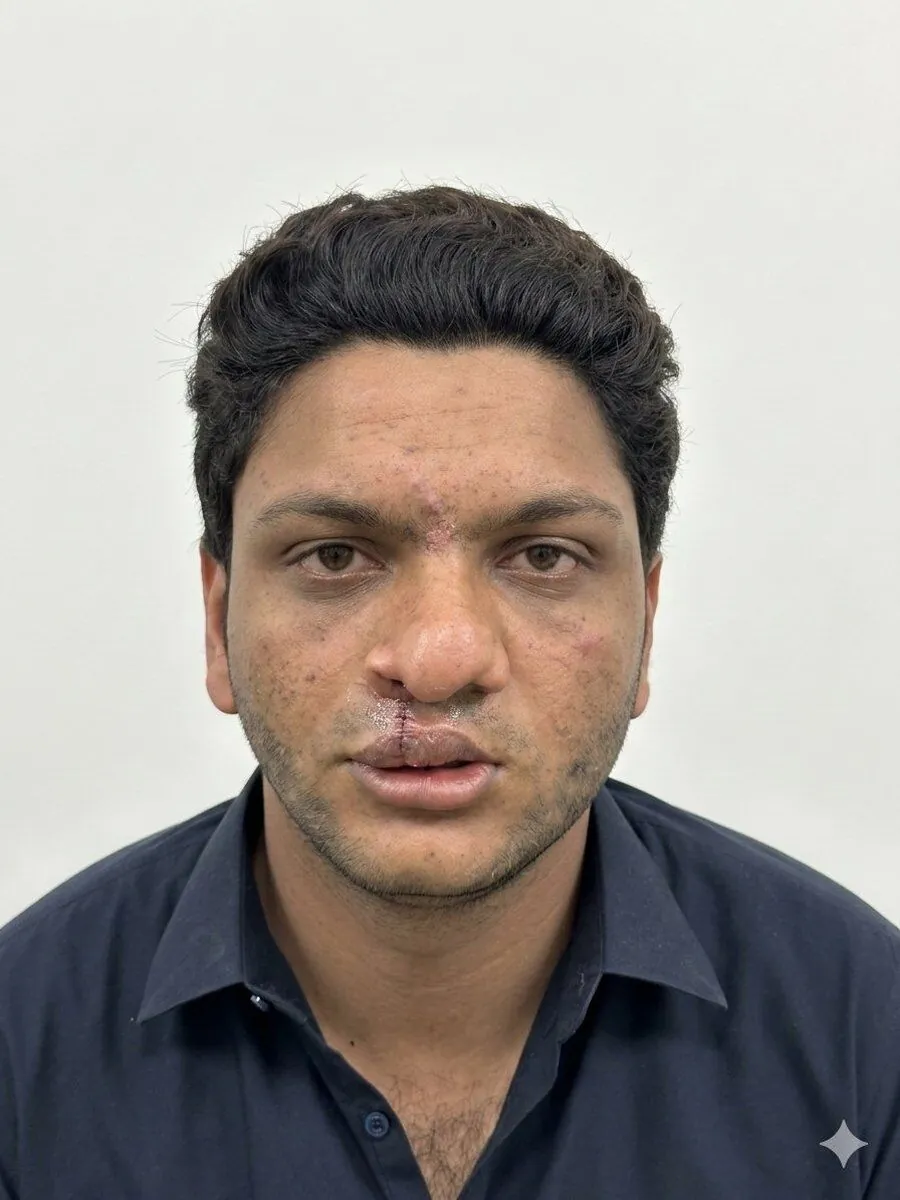
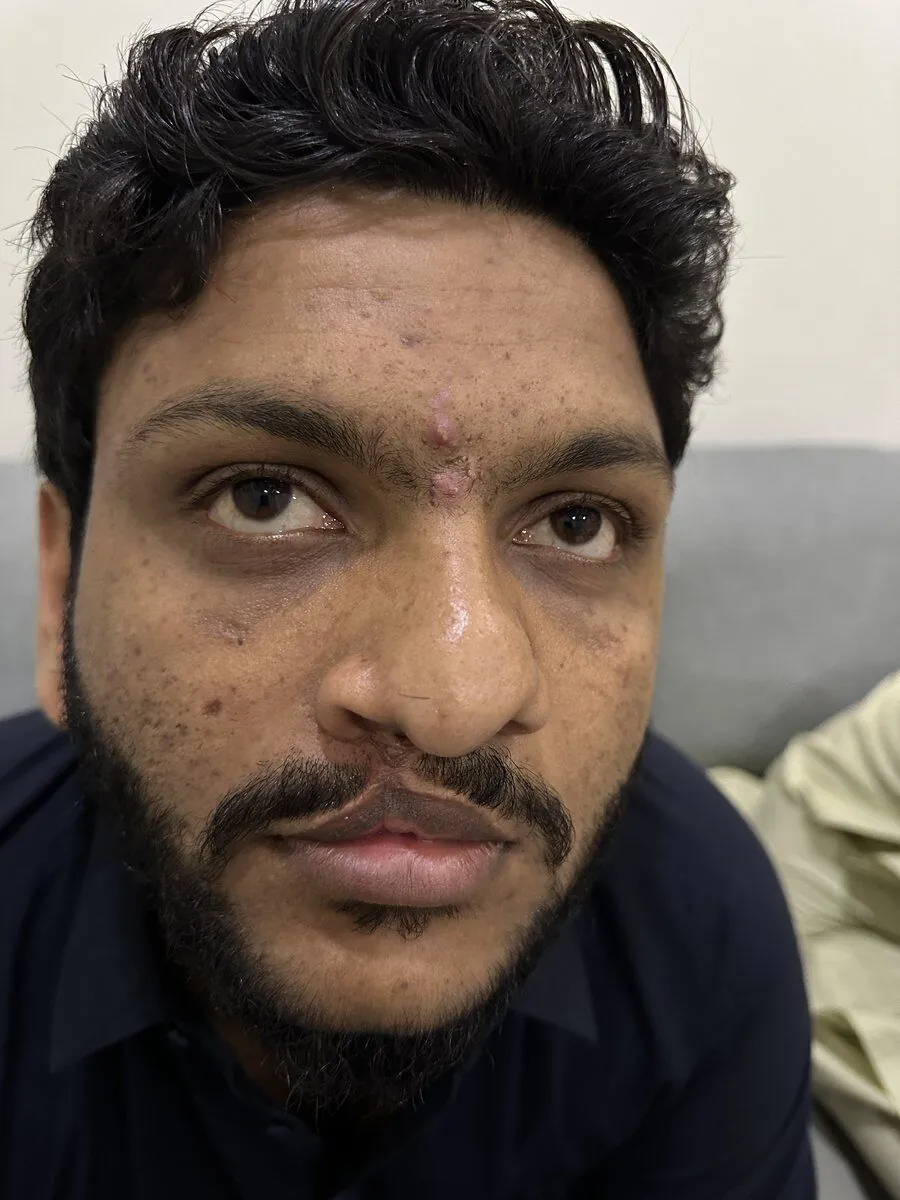 Before
After
Photos are shared with patient consent. Results vary from person to person. See more results
Benefits of Cleft Lip & Palate Surgery
A Balanced Lip
Lip repair lines up the muscle, skin and red edge of the lip to give a more even upper lip and nostril.
Easier Feeding
Closing the palate separates the mouth from the nose, so milk and food no longer escape through the nose.
Support for Speech
A well-timed palate repair gives your child a strong foundation for clear speech.
Planned Around Your Child
Each stage is timed to your child’s age, weight and health rather than a fixed calendar.
Guidance for Parents
You get clear, practical advice on feeding, sleeping and wound care at every stage.
Follow-Up as They Grow
Dr. Junaid guides you on the speech, hearing and dental checks your child will need over the years.
Are you a good candidate?
Cleft surgery may be recommended for:
- Babies born with a cleft lip on one or both sides
- Babies with a cleft of the soft palate, the hard palate or both
- Children whose speech still sounds nasal after palate repair
- Children around 8 to 12 years old who need a bone graft in the gum line
- Older children, teenagers or adults with an uneven lip, scar or nose after an earlier repair
- Adults whose cleft was never treated in childhood
Your baby needs to be well and gaining weight before the first operation. Dr. Junaid checks this at each visit and may ask for a review by your child’s paediatrician.
Recovery & aftercare
Each stage has its own recovery. For the main operations in infancy:
- Lip repair, first few days
Your baby may be fussy and swollen. The stitch line is kept clean, and soft arm splints may be used for a short time to keep little hands away from the lip.
- Lip repair, days 5 to 7
Stitches are removed or dissolve, and feeding usually returns to its normal pattern.
- Palate repair, weeks 1 to 3
Your child has a soft or liquid diet, avoids hard toys and spoons in the mouth, and takes pain relief as advised. Most go home after one or two nights.
- First month
Swelling settles and the scar begins to mature. Normal play and routines return gradually.
- Childhood and teenage years
Regular reviews track speech, hearing, teeth, jaw growth and the nose, and further procedures are planned only when they will help.
The lip scar looks red and firm for a few months before it softens and fades. Results vary between children, and Dr. Junaid will explain what to expect at each stage.
What patients say
Dr. Junaid repaired my daughter's cleft lip and the result is beautiful. He treated our family with such compassion. We are forever grateful.
Cleft Lip & Palate Surgery FAQs
At what age is cleft lip and palate repaired?
Lip repair is usually done at around three to six months, once your baby is healthy and gaining weight. The palate is usually repaired between nine and twelve months, before speech starts to develop. Dr. Junaid tailors the exact timing to your child.
How should I feed my baby before surgery?
Many babies with a cleft lip alone can breastfeed. A cleft palate makes sucking harder, so a soft squeezable bottle or special teat, an upright feeding position and frequent burping often help. Dr. Junaid’s team can guide you, and your baby’s weight is checked at each visit.
Will my baby be in pain?
Surgery is done under general anaesthetic, so your child is fully asleep. Afterwards there is some soreness, which is managed with regular pain relief suitable for babies. Most babies settle within a few days, and cuddles and familiar feeding routines help.
How long is recovery, and how much time off will I need?
Plan for one to two weeks of close care at home after each operation. Many parents take a week or two off work to help with feeding and comfort. Older children having later procedures usually return to school within one to two weeks.
Will my child need more than one operation?
Often, yes. Most children have separate lip and palate operations, and some later need speech surgery, a bone graft to the gum, or refinement of the lip or nose as they grow. Each step is recommended only if it will make a real difference.
Are the results permanent?
The repairs are permanent, but faces grow and change, so a lip or nose that looks balanced in infancy may need refining later. Like any surgery, there are risks, such as a small hole in the palate (fistula), wound problems, scarring and speech that still needs extra help. Dr. Junaid goes through these with you at consultation.
How much does cleft surgery cost in Lahore?
The cost depends on the type of cleft, which stage of treatment your child needs, the anaesthetic, the length of the hospital stay and any tests required. Dr. Junaid will give you a personalised quote after the consultation. For a general guide to what affects pricing, see the cost guide.
Can I have an online consultation from abroad?
Yes. Send clear photos of your child’s face and, if possible, the inside of the mouth on WhatsApp, along with any reports, and book a video consultation. Dr. Junaid can explain the likely stages and timing, and the final plan is confirmed after he examines your child in person in Lahore.
What are the risks or side effects of cleft lip and palate surgery?
Like any surgery, cleft repair carries risks. These include bleeding, infection, the wound opening, a visible or tight scar, a small hole remaining in the palate (fistula) and speech that still sounds nasal and needs further help. Risks are reduced by operating only when your baby is well and gaining weight, planning the anaesthetic with a team experienced in caring for children, and careful feeding and wound care afterwards. Dr. Junaid goes through these with you at consultation.
When will I see the final results of cleft lip and palate surgery?
The lip scar looks red and firm for a few months before it softens and fades. Speech develops over the following years and is checked at regular reviews. Because the face keeps growing, the final result of cleft care is usually judged in the teenage years, when any refinement of the lip or nose can be planned.
Roman Urdu mein maloomat (کٹے ہونٹ اور تالو کی سرجری)
Kuch bachche kate hue hont ya talu ke sath paida hote hain, jis se doodh peene aur bolne mein mushkil hoti hai. Dr. Junaid Fateh Lahore mein bachchon ko dekhte hain aur munasib umar par hont aur talu ka operation plan karte hain. Mashware ke liye WhatsApp par rabta karein.
WhatsApp par mashwara book karein