Quick answer
Facial fat grafting, or fat transfer, moves a small amount of your own fat into the cheeks, temples or under-eyes to restore lost volume. In Lahore it is performed by FCPS plastic surgeon Dr. Junaid Fateh. It takes 1 to 2 hours as a day case under local anesthesia with sedation, with 1 to 2 weeks off. The fat that survives lasts for several years. Cost depends on your plan and is confirmed after consultation.
Also known as: Fat transfer, Facial fat transfer, Fat transfer to face, Lipofilling, Autologous fat grafting, Fat injections to the face, Apni charbi se chehra bharna · چہرے میں چربی کی منتقلی
About Fat Grafting & Transfer
With age, the face loses volume as well as firmness. Cheeks flatten, temples hollow and shadows form under the eyes, which can make you look tired even when you feel well. Fat grafting, also called fat transfer or lipofilling, replaces some of that lost volume using fat from your own body.
A small amount of fat is gently removed from an area where you have some to spare. It is then cleaned and prepared before being injected in tiny amounts wherever fullness is needed. Because the material is your own, it blends with the surrounding tissue and feels soft to the touch.
This page focuses on facial fat grafting with Dr. Junaid Fateh, a plastic, cosmetic and reconstructive surgeon in Lahore. Fat transfer to the breasts or buttocks is described on separate procedure pages.
How Dr. Junaid approaches fat grafting
At your consultation Dr. Junaid studies your face from the front and the side, looking at where volume has been lost and where it has not. Adding fat in the wrong place can make a face look heavy, so the plan is about restoring natural contours rather than simply making things fuller. He also checks possible donor sites and asks about your weight history, since a stable weight helps the result last.
During the procedure the fat is collected with a thin cannula, processed to separate it from fluid and oil, and placed in small droplets across several layers. This careful layering gives the fat the best chance of picking up a blood supply and helps avoid lumps.
Not all of the transferred fat survives, and the amount varies. Dr. Junaid explains this honestly before you decide, and in some cases a second, smaller session is advised. Like any procedure, fat grafting carries risks, including bruising, swelling, lumpiness, uneven results, infection and rare but serious complications. He goes through these with you at consultation so you can make an informed choice.
Techniques and options
- Cheek and mid-face restoration: Rebuilds flattened cheeks for a fresher, gently lifted look without changing your features.
- Under-eye hollows: Very fine fat is placed carefully to soften the groove between the lower eyelid and the cheek.
- Temple filling: Softens the hollow at the sides of the forehead that can make the face look narrow or drawn.
- Smile lines and lips: Small amounts can soften deep lines running from nose to mouth or add subtle volume to thin lips.
- Scars and contour dents: Fat can lift some depressed scars and smooth irregularities left by injury or earlier surgery.
- Combined procedures: Fat grafting can be paired with a facelift, neck lift or eyelid surgery to restore volume as well as lift.
What to expect on the day
Most facial fat grafting is a day-case procedure lasting one to two hours under local anesthesia with sedation. Dr. Junaid marks the areas to be treated, collects and prepares the fat, then shapes your face one area at a time. You go home the same day with a small dressing on the donor site, advice on keeping your head raised and a follow-up appointment.
Before & after
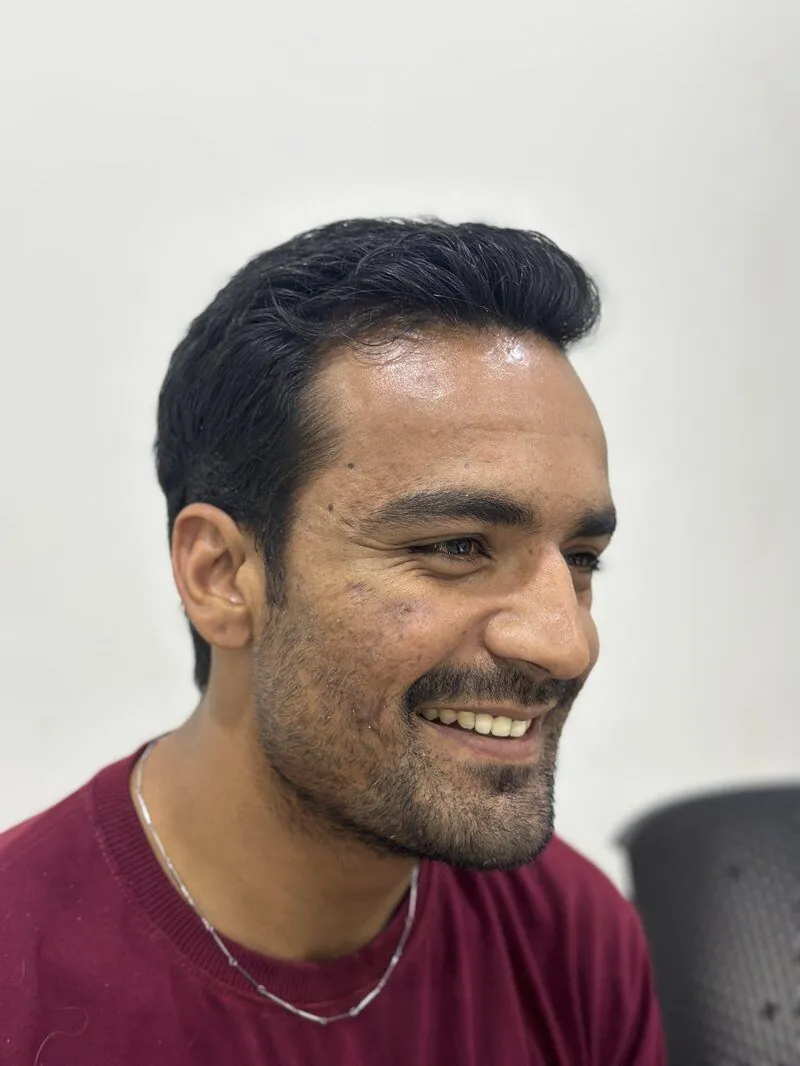
 Before
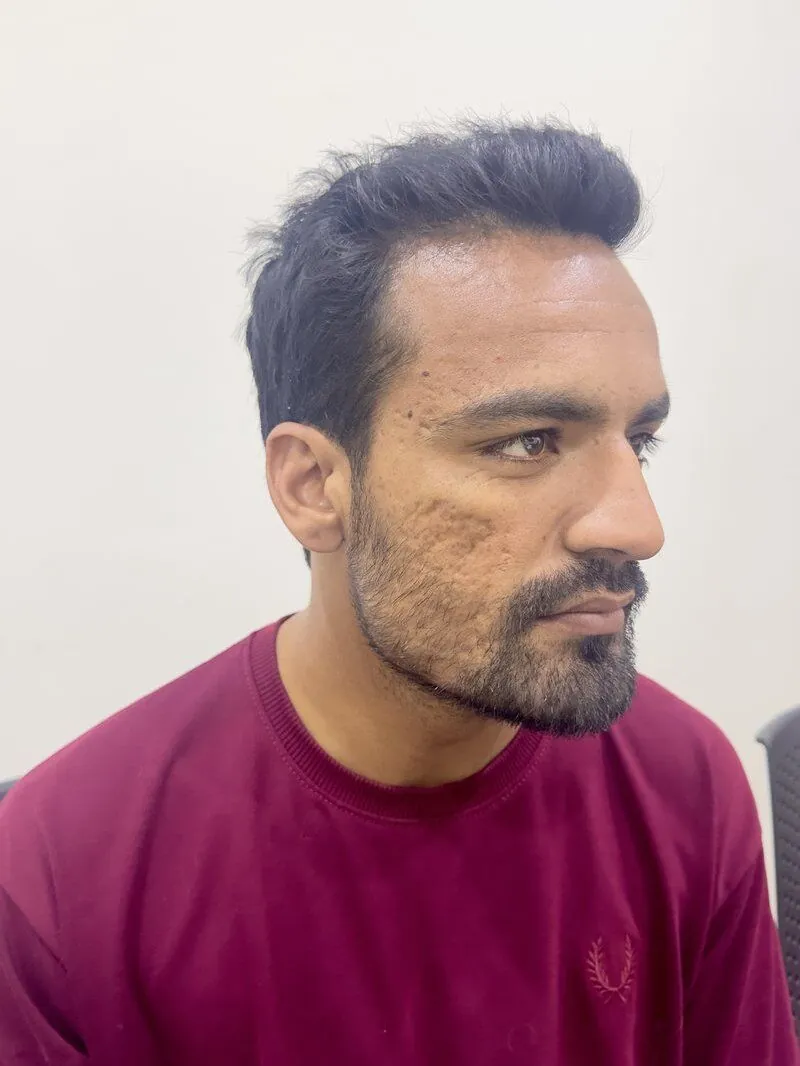
After
Photos are shared with patient consent. Results vary from person to person. See more results
Benefits of Fat Grafting & Transfer
Your Own Tissue
The volume comes from your own body, so there is no foreign material for your tissues to react to.
Soft, Natural Feel
Grafted fat settles in among your own tissues and moves naturally when you smile and talk.
Volume That Lasts
Fat that takes hold can last for years, unlike fillers that gradually break down.
Gentle Donor Contouring
Fat is taken from a spot such as the tummy or thighs, which may leave that area slightly trimmer.
Precise Placement
Tiny amounts are layered through fine cannulas so each area of the face is shaped with care.
Help for Scars and Dents
Fat grafting can also soften some depressed scars and smooth contour irregularities.
Are you a good candidate?
Facial fat grafting may suit you if you:
- Have hollow cheeks, temples or under-eye areas from aging or weight loss
- Want a natural alternative to repeated filler injections
- Have enough spare fat somewhere on your body for a small harvest
- Have a dent, depressed scar or contour irregularity you would like softened
- Are at a stable weight and in good general health
- Accept that a touch-up session is sometimes needed
If you are very slim, Dr. Junaid will check whether enough fat is available, or whether fillers or another option would suit you better.
Recovery & aftercare
Recovery after facial fat grafting is usually quicker than after larger facial surgery. These times are typical, and every person heals differently:
- Days 1–3
The treated areas look fuller than the final result and may bruise. Cool compresses and sleeping with your head raised help.
- Week 1
Facial swelling starts to come down. The donor area may feel sore and bruised, and a compression garment may be advised.
- Weeks 1–2
Most people return to work and normal routines. Avoid pressing on or massaging the face unless you are told to.
- Weeks 2–4
Remaining swelling fades. Keep wearing any compression on the donor area for as long as advised.
- Month 3 onwards
The fat that has taken hold is now stable, and what you see is close to the final result.
Some of the transferred fat is naturally absorbed in the early weeks. Dr. Junaid allows for this when planning, and a small top-up is occasionally recommended.
Fat Grafting & Transfer FAQs
How much of the grafted fat stays?
Not every fat cell survives the move. Part of it is reabsorbed over the first weeks to months, and the amount differs between people and between areas of the face. The fat that develops a blood supply generally stays, which is why the result is long-lasting.
Which part of the body is the fat taken from?
Usually the abdomen, flanks, thighs or inner knees. Dr. Junaid chooses a site where you have fat to spare and where a small harvest will not leave a noticeable change.
Is fat grafting better than fillers?
Each has its place. Grafted fat is your own living tissue and can last for years, but it needs a short procedure and has some downtime. Fillers are quicker with less downtime, but they break down over time and need repeating. Dr. Junaid can help you decide which suits your face and lifestyle.
Does fat grafting hurt?
Both the donor and treatment areas are numbed with local anesthesia, usually with sedation, so the procedure itself should be comfortable. Afterwards you may feel sore and tender for a few days, mainly where the fat was taken, and simple painkillers usually help.
How long do the results last?
Once the surviving fat has settled, usually by around three months, it behaves like your own tissue and can last for several years. Your face will still age naturally, and large changes in body weight can affect the grafted fat too. Results vary from person to person.
How soon can I go back to work?
Many people are back at work within one to two weeks. Bruising and swelling are the main reasons to stay home, so plan around any family event or wedding you have coming up.
How much does fat grafting cost in Lahore?
The price depends on how many areas are treated, how much fat is needed, the type of anesthesia and whether it is combined with another procedure. Once Dr. Junaid has assessed you, he will give you a personalized quote. For a fuller explanation of the factors involved, see the cost guide.
Can I have an online consultation from abroad?
Yes. Send a few clear photos of your face in good light on WhatsApp and arrange a video consultation. Dr. Junaid can talk you through whether fat grafting is a good fit, and the final plan is confirmed once he sees you in person.
What are the risks or side effects of fat grafting?
Swelling and bruising of the face and soreness at the donor site are expected for the first week or two. Some of the transferred fat is naturally reabsorbed, so the result can be less than planned and a small top-up is occasionally needed. Less common risks include lumps or unevenness, infection and, rarely, fat entering a blood vessel, which can be serious. Careful, gentle injection of small amounts at a time and good aftercare help keep these risks low.
When will I see the final results of fat grafting?
The treated areas look fuller than the final result at first because of swelling. This settles over two to four weeks, while some of the fat is reabsorbed. By around three months the fat that has taken hold is stable, and what you see then is close to your final result.
Roman Urdu mein maloomat (چہرے میں چربی کی منتقلی)
Fat grafting mein aap ke apne jism, jaise pait ya raan, se thodi si charbi le kar chehre ke dhanse hue hisson, jaise gaal, kanpatti aur aankhon ke neeche, mein lagayi jati hai. Dr. Junaid Fateh Lahore mein mareezon ko dekhte hain. Mashware ke liye WhatsApp par rabta karein.
WhatsApp par mashwara book karein