Quick answer
Wound management is specialist care for wounds that are slow to heal, such as bed sores, ulcers and wounds that open after surgery, using cleaning, dressings, debridement and, when needed, skin grafts or flaps. FCPS plastic surgeon Dr. Junaid Fateh sees patients in Lahore. Procedures take 30 minutes to 3 hours under local or general anaesthesia, and recovery varies with the wound. Cost depends on your plan and is confirmed after consultation.
Also known as: Wound care, Chronic wound treatment, Non-healing wound treatment, Bed sore (pressure ulcer) treatment, Wound debridement, Zakhm ka ilaj, Na bharne wale zakhm ka ilaj · زخموں کا علاج
About Wound Management
Most cuts and grazes heal on their own within a couple of weeks. A wound that stays open, keeps weeping or gets larger is a sign that something is getting in the way of healing. That might be infection, poor circulation, raised blood sugar, pressure on the area, poor nutrition, smoking or certain medicines.
Dr. Junaid Fateh, a plastic and reconstructive surgeon practising in Lahore, sees patients with long-standing ulcers, bed sores, wounds that have opened up after an operation and injuries that have not closed properly. Wound management means finding the reason a wound is stuck, putting it right, and then choosing the simplest method that will close it. Sometimes that is good dressings and patience. Sometimes it is a short operation.
When to seek urgent care. If redness is spreading, the wound smells bad, or you have a fever or feel unwell, go to the nearest emergency department or contact your doctor the same day. For a fresh, deep or heavily bleeding injury, go to the emergency department first.
How Dr. Junaid approaches wound management
At the first visit Dr. Junaid looks closely at the wound, its size, depth and edges, and asks how it started. He checks the circulation and feeling in the area and may arrange blood tests, a swab or a scan to look for infection or bone involvement.
Healing depends on your whole health, not only the wound. If you have diabetes, kidney disease or heart problems, Dr. Junaid works alongside your physician or diabetologist so that blood sugar, blood pressure and other medicines are well controlled. He will also advise on diet to support healing and on taking pressure off the area.
You and your family are part of the team. Many wounds are dressed at home between visits, so the clinical team shows you how to do this cleanly, especially in hot, humid weather when dressings can loosen with sweat, and what warning signs to look out for. Wound surgery has risks, including infection, bleeding, a graft or flap not taking fully and the wound reopening, and Dr. Junaid explains these at consultation.
Techniques and options
Options Dr. Junaid may recommend include:
- Debridement: removing dead or infected tissue so the healthy tissue underneath can grow. This may be done in clinic or under anaesthesia, and sometimes needs repeating.
- Modern dressings: matching the dressing to the stage of the wound, whether it is dry, wet or infected, and setting a sensible changing routine.
- Negative pressure wound therapy: a sealed foam dressing connected to a small suction pump, which draws off fluid and encourages healthy tissue to fill the wound.
- Pressure relief and off-loading: cushions, positioning, special footwear or splints to keep weight off the wound.
- Skin grafting: covering a clean wound with a thin layer of skin taken from another part of your body.
- Flap surgery: moving nearby tissue with its own blood supply to cover deeper wounds, such as those with exposed bone, tendon or metalwork.
- Closure and scar care: stitching the wound once it is ready, then helping the scar settle.
- Fresh wound and laceration repair: Cleaning and carefully closing new cuts and injuries in layers, so they heal with the neatest possible scar. Go to the nearest emergency department first for serious or heavily bleeding wounds.
What to expect on the day
Many visits are short and involve a wound check and a fresh dressing. If a procedure is planned, you may be asked not to eat for a few hours and will be told which medicines to pause. Smaller procedures are done under local anaesthetic and you go home the same day.
Before & after
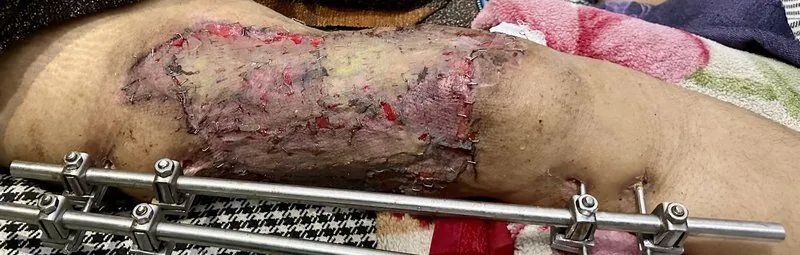
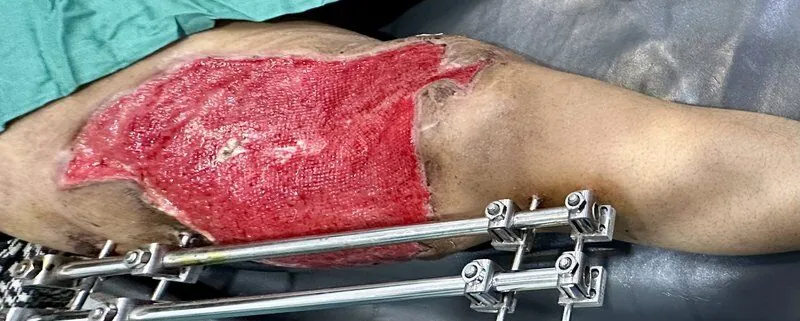 Before
After
Photos are shared with patient consent. Results vary from person to person. See more results
Benefits of Wound Management
Finding the Cause
The reasons a wound is not healing are looked for and treated, not just the wound itself.
The Right Step at the Right Time
Care moves from dressings to surgery only when the wound genuinely needs it.
Infection Control
Dead or infected tissue is removed promptly to lower the risk of infection spreading.
Joined-Up Care
Dr. Junaid works with your physician or diabetologist on blood sugar and other health factors.
Support at Home
You and your family learn how to dress the wound safely and what warning signs to watch for.
Thoughtful Closure
When a wound is ready, it is closed in a way that aims for a comfortable, flat scar.
Are you a good candidate?
Specialist wound care may help if you have:
- A wound that has not clearly improved after four to six weeks of regular care
- A bed sore (pressure ulcer), or a bed-bound family member who has one
- A wound that has opened up after an operation
- A leg or foot ulcer linked to diabetes or poor circulation
- An injury that has not closed properly
- A wound with exposed bone, tendon or surgical metalwork
If redness is spreading, the wound smells bad, or you have a fever or feel unwell, do not wait for a routine appointment. Seek urgent care at the nearest emergency department.
Recovery & aftercare
Healing time depends on the wound, its cause and your general health. A typical course looks like this:
- First visit
Assessment, cleaning and a written plan. Infection is treated and health problems that slow healing are addressed with your doctor.
- Early weeks
Regular dressing changes in clinic or at home. With negative pressure therapy, dressings are usually changed every two to three days.
- Surgery if needed
Debridement, a skin graft or a flap. Initial healing after a graft or flap usually takes one to three weeks.
- Healing phase
The wound shrinks steadily over weeks to months. Good blood sugar, nutrition and pressure relief keep progress going.
- Long term
Once the wound has closed, the new skin is protected and the underlying cause is managed to help stop it returning.
Every wound heals at its own pace and results vary between people. Dr. Junaid reviews progress at each visit and adjusts the plan as needed.
Wound Management FAQs
Why is my wound not healing?
Common reasons include infection, poor blood flow, high blood sugar, ongoing pressure or rubbing, poor nutrition, smoking and some medicines such as steroids. Often more than one factor is involved, which is why Dr. Junaid looks at your overall health as well as the wound.
When should I see a specialist about a wound?
Book an assessment if a wound has not clearly improved after four to six weeks of normal care. Seek urgent help at the nearest emergency department straight away if redness is spreading, there is pus or a bad smell, or you develop a fever. A fresh, deep or heavily bleeding injury should also go to the emergency department first.
Is wound treatment painful?
Dressing changes can sting, and taking pain relief beforehand helps. Debridement and surgery are done under local or general anaesthetic so you are comfortable. Some people, especially those with diabetes, have reduced feeling around a wound, which is another reason to have it checked regularly.
How long will healing take, and will I need time off work?
Simple wounds may close within a few weeks, while long-standing ulcers can take months. Many people keep working with a dressing in place. If you have a skin graft or flap, you will usually need one to three weeks off and should avoid straining the area.
Will the wound come back once it has healed?
A healed wound can stay closed for good if its cause is controlled. Ulcers linked to pressure, diabetes or poor circulation can return if those problems continue, so ongoing care with your own doctor is important. Results vary between people.
How much does wound management cost?
The cost depends on the size and type of wound, how many visits and dressings are needed, whether negative pressure therapy or surgery is required, and any hospital stay. You will receive a personalised quote after your consultation, and the cost guide explains what affects the price.
Can I have an online consultation from abroad?
Yes. You can send photos of the wound on WhatsApp and book a video consultation with Dr. Junaid, which can help if you are arranging care for a relative in Pakistan. The final plan is confirmed in person. A video call is not a substitute for urgent care if the wound looks infected.
What are the risks or side effects of wound treatment?
Dressing changes and debridement can be uncomfortable, and removing dead tissue may cause some bleeding. If surgery is needed, risks include infection, part of a graft or flap not taking, delayed healing and the wound coming back if its cause continues. Risks are reduced by treating infection early, controlling blood sugar, good nutrition, relieving pressure on the wound and not smoking. Dr. Junaid explains the risks of each step before it is done.
Roman Urdu mein maloomat (زخموں کا علاج)
Wound management mein aise zakhmon ka ilaj kiya jata hai jo der se bhar rahe hon, jaise bed sore, purane ulcer ya operation ke baad khul jane wale zakhm. Dr. Junaid Fateh Lahore mein mareezon ko dekhte hain aur zakhm ki wajah dhoond kar marhala-war ilaj ka plan banate hain. Mashware ke liye WhatsApp par rabta karein.
WhatsApp par mashwara book karein