Quick answer
A beard transplant moves hair follicles from the back of the scalp into a patchy beard, moustache or facial scars, using the FUE method. In Lahore it is performed by FCPS plastic surgeon Dr. Junaid Fateh. It takes 3 to 6 hours under local anaesthetic, with 7 to 10 days of recovery. New hair shows at 4 to 6 months and is usually permanent. Cost is confirmed after consultation.
Also known as: Facial hair transplant, Beard hair transplant, FUE beard transplant, Moustache transplant, Mustache transplant, Darhi ke baal lagwana, Darhi ka transplant · داڑھی کا ٹرانسپلانٹ
About beard transplant
A beard transplant moves hair follicles, usually from the back of the scalp, into areas of the face where beard hair is thin or missing. It uses the same FUE method as a scalp transplant, with each graft removed individually, so no strip of skin is cut from the scalp.
Many men grow some beard but are left with gaps on the cheeks, a weak join between moustache and beard, or a sparse chin. Others have bare patches caused by old injuries, acne scarring, burns or a repaired cleft lip. A beard transplant can fill these areas so the beard looks even and connected.
Once the transplanted hairs grow, you can trim, shape or shave them like the rest of your beard. Scalp hair can feel a little softer or straighter than natural beard hair, but placed at the right angle and density it usually blends in well.
How Dr. Junaid approaches beard transplant
Facial hair grows at a very flat angle and changes direction across the cheeks, jaw, chin and neck. Getting this right is what separates a natural beard from an obviously transplanted one, so Dr. Junaid Fateh maps the direction of your existing hair and plans each zone separately. Single-hair grafts are used along the cheek line and edges, with slightly larger grafts where more density is needed.
At consultation he asks how you like to wear your beard, from short stubble to a fuller style, and draws the planned shape on your face so you can see it in the mirror before anything is done. He also checks your scalp donor hair, because using it for the beard should not leave you short if you want a scalp transplant later.
Because he also works in reconstructive surgery, Dr. Junaid is used to assessing scarred skin. Scars can have a poorer blood supply, so grafts may take less reliably and a second session is sometimes planned. He explains this, along with other risks such as redness, swelling, infection, ingrown hairs and uneven growth, at your consultation.
Techniques and options
Options Dr. Junaid may recommend include:
- Full beard design: building a beard from very little existing hair, with the shape agreed in advance and density added in stages if needed.
- Patchy area fill: adding grafts only to the gaps so the whole beard looks even.
- Moustache and goatee: creating or thickening hair around the mouth and chin.
- Cheek line and sideburns: defining the upper border of the beard and joining it to the sideburns.
- Scar camouflage: placing hair into facial scars, including old cleft lip repair scars on the upper lip.
What to expect on the day
The hair over a small donor patch is clipped short, then local anaesthetic is used to numb the scalp and the face. After harvesting, tiny sites are made on the face at the planned angles and each graft is placed individually. The procedure usually takes 3–6 hours with breaks, and you go home the same day.
Before & after
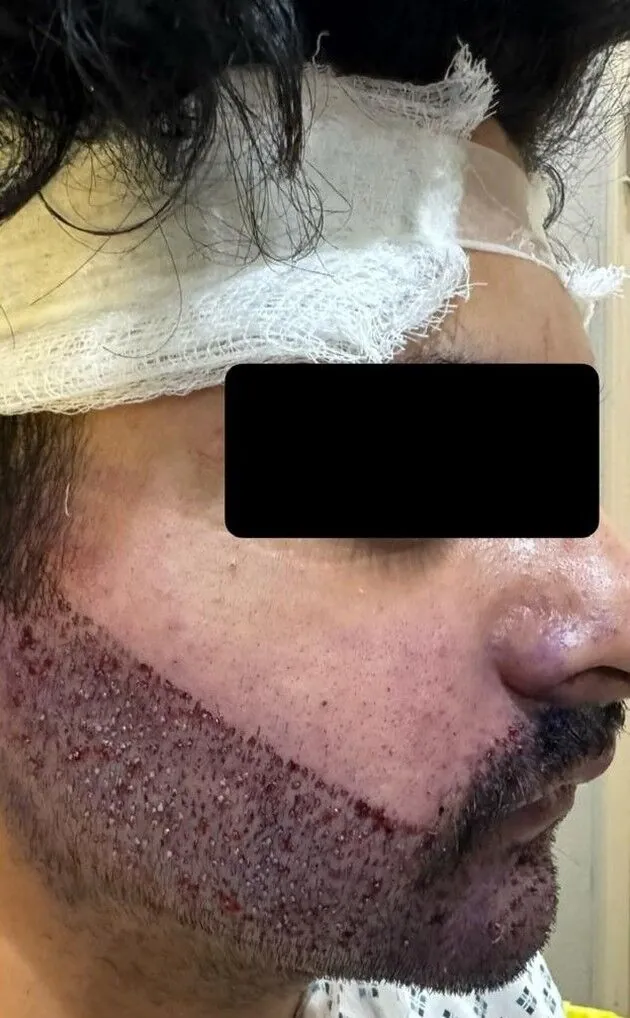
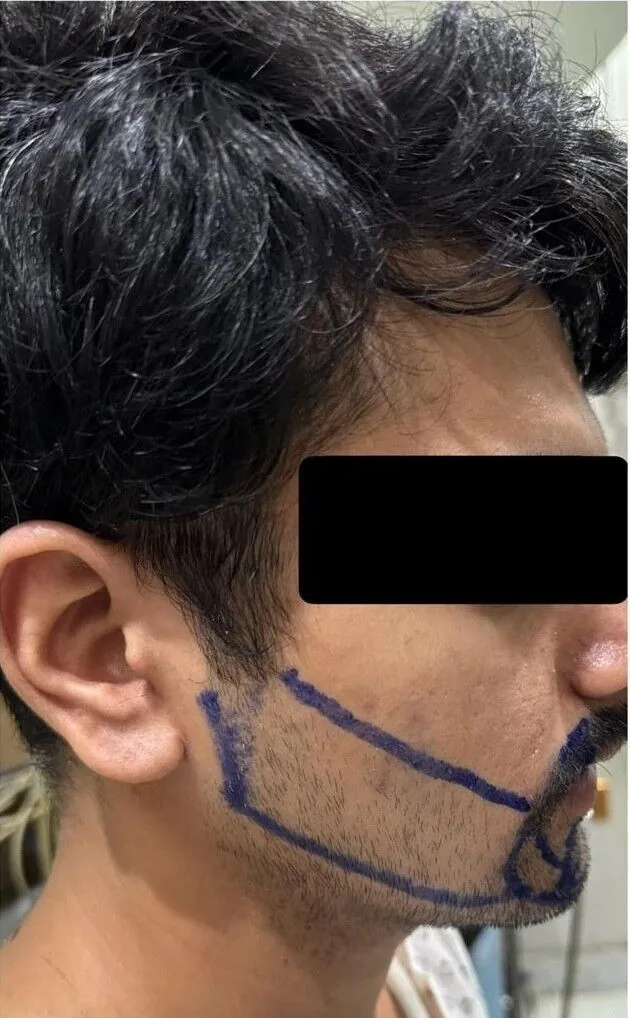 Before
After
Photos are shared with patient consent. Results vary from person to person. See more results
Benefits of Beard Transplant
Shaped to Suit You
Your beard line and density are designed around your face and the style you like to wear.
Natural Hair Angles
Grafts follow the flat, changing direction of facial hair so they lie like a real beard.
Groom It Your Way
Once grown, the new hair can be trimmed, shaped or shaved like the rest of your beard.
Long-Lasting Growth
Hair from the scalp donor area tends to keep growing in its new place for the long term.
Help for Facial Scars
Hair can help disguise scars from injury, acne, burns or an earlier cleft lip repair.
Short Recovery
Redness and tiny crusts on the face usually settle within 7–10 days.
Are you a good candidate?
A beard transplant may suit you if you:
- Have a patchy or thin beard that has not filled in by your mid-twenties
- Want a stronger cheek line, moustache, goatee or sideburns
- Have facial scars where beard hair no longer grows
- Have a healthy donor area on the scalp to take grafts from
- Are in good general health, with diabetes or other conditions well controlled
- Accept that growth takes several months and a second session may be needed for density
If your beard is still filling in naturally, Dr. Junaid may suggest waiting, as facial hair often keeps thickening into the mid-twenties.
Recovery & aftercare
The face heals quickly, but the new beard takes time to grow in. A typical timeline:
- Days 1–3
Small crusts form around each graft and the cheeks may be slightly swollen. Avoid touching the area and sleep on your back.
- Days 4–10
Crusts fall away with gentle washing as the team demonstrates, including how to do wudu without rubbing the grafts. Most people are back at work during this stage.
- Weeks 2–6
Many of the transplanted hairs shed, which is normal. Wait for the team’s go-ahead before shaving the treated area.
- Months 3–6
New beard hairs begin to grow and gradually fill in the planned shape.
- Months 9–12
The beard reaches its full look, and you can groom it like the rest of your facial hair.
Avoid heavy sweating, steam rooms and strong sun on the face for the first couple of weeks, especially in the hot months.
What patients say
Always wanted a fuller beard. Dr. Junaid's beard transplant gave me exactly that. The density is perfect and it looks completely natural.
Related articles
Beard Transplant FAQs
How much does a beard transplant cost?
The price depends on the number of grafts, whether you need a full beard or only certain areas, and how much scar tissue is involved. Your personalised quote is given at consultation, once Dr. Junaid has assessed exactly what you need. For a general overview, see the cost guide.
Is a beard transplant painful?
The face and the donor area are numbed with local anaesthetic, so the procedure itself should not be painful once the first injections are done. Mild soreness and swelling for a few days is common and is usually eased with simple painkillers.
How long does a transplanted beard last?
The hair comes from the scalp donor area, which tends to keep growing long term, so the result is generally long-lasting. Results vary between people, and some grafts may not take, particularly in scarred skin.
When can I go back to work?
Redness and crusting usually settle in 7–10 days. Many people return to work after around five days, but if your job involves meeting people face to face, you may prefer to take a full week.
How many grafts does a beard transplant take?
It depends on your goals. Filling a few small gaps may need a few hundred grafts, while building a full beard can take a couple of thousand or more. Dr. Junaid confirms the number once he has seen your face and donor area.
Can I shave or trim my new beard?
Yes, once it has healed and grown. Trimming and shaving are usually fine after the first few weeks, and the team will tell you when it is safe to start.
Can I have an online consultation from abroad?
Yes. WhatsApp clear photos of your face from the front and both sides, plus the back of your scalp, and set up a video consultation. Dr. Junaid can then suggest an initial beard design, which he finalises with you in person before the procedure.
How far ahead of a wedding should I plan it?
Give yourself plenty of time. Your face usually looks normal within about two weeks, but a fuller beard takes around 9–12 months to develop, so book well before the wedding or Eid you have in mind.
What are the risks or side effects of a beard transplant?
Short-lived redness, swelling, small crusts and mild soreness on the face and donor area are common. Less often there may be infection, ingrown hairs, small pimples around the grafts or uneven growth, and grafts take less reliably in scarred skin. Dr. Junaid reduces these risks with careful planning, sterile technique, a graft number your donor area can spare and clear aftercare, and he goes through them with you at consultation.
When will I see the final results of a beard transplant?
Most transplanted hairs shed in the first two to six weeks, which is normal. New beard hair usually becomes visible at around 4 to 6 months, and the beard reaches its full look at about 9 to 12 months. Results vary between people, and a second session is sometimes planned for extra density or for scarred areas.
Roman Urdu mein maloomat (داڑھی کا ٹرانسپلانٹ)
Beard transplant mein sar ke peeche se baal le kar darhi, moonchh ya qalmon ki khali jagah par lagaye jate hain, taake darhi bhari aur barabar nazar aaye. Chehre par chot, daanon ya jalne ke nishan bhi is tareeqe se chhupaye ja sakte hain. Dr. Junaid Fateh Lahore mein yeh procedure karte hain. Mashware ke liye WhatsApp par rabta karein.
WhatsApp par mashwara book karein