 By Dr. Muhammad Junaid Fateh
· Updated · 5 min read
Key takeaways
- The biggest factor in hair transplant cost is the number of grafts your scalp needs and your donor area can safely give.
- Technique (FUE, FUT, Sapphire FUE or DHI), surgeon involvement, facility and aftercare all change the price.
- Per-graft quotes are hard to compare because clinics count, estimate and include different things.
- Very cheap offers can mean technician-led surgery, over-harvesting or little aftercare, which can be costly to repair.
- An accurate quote follows an assessment, which can start with photos and a video consultation.
The cost of a hair transplant in Pakistan depends mainly on how many grafts you need, which technique is used, how much of the work the surgeon does personally, the standard of the facility and what aftercare is included. Because these vary so much from one person to the next, an honest quote can only be given after your scalp has been assessed, in person or through an online consultation with photos.
Dr. Junaid Fateh, an FCPS plastic surgeon who sees hair transplant patients in Lahore, explains each factor below so you can compare quotes properly and avoid the common traps.
1. The number of grafts you need
A graft is a follicular unit: a small natural bundle of one to four hairs. The number of grafts you need is the single biggest driver of cost, because more grafts mean a longer day and more work for the whole team.
Your graft count depends on:
- The area to be covered: the hairline and temples alone need far fewer grafts than the hairline, mid-scalp and crown together.
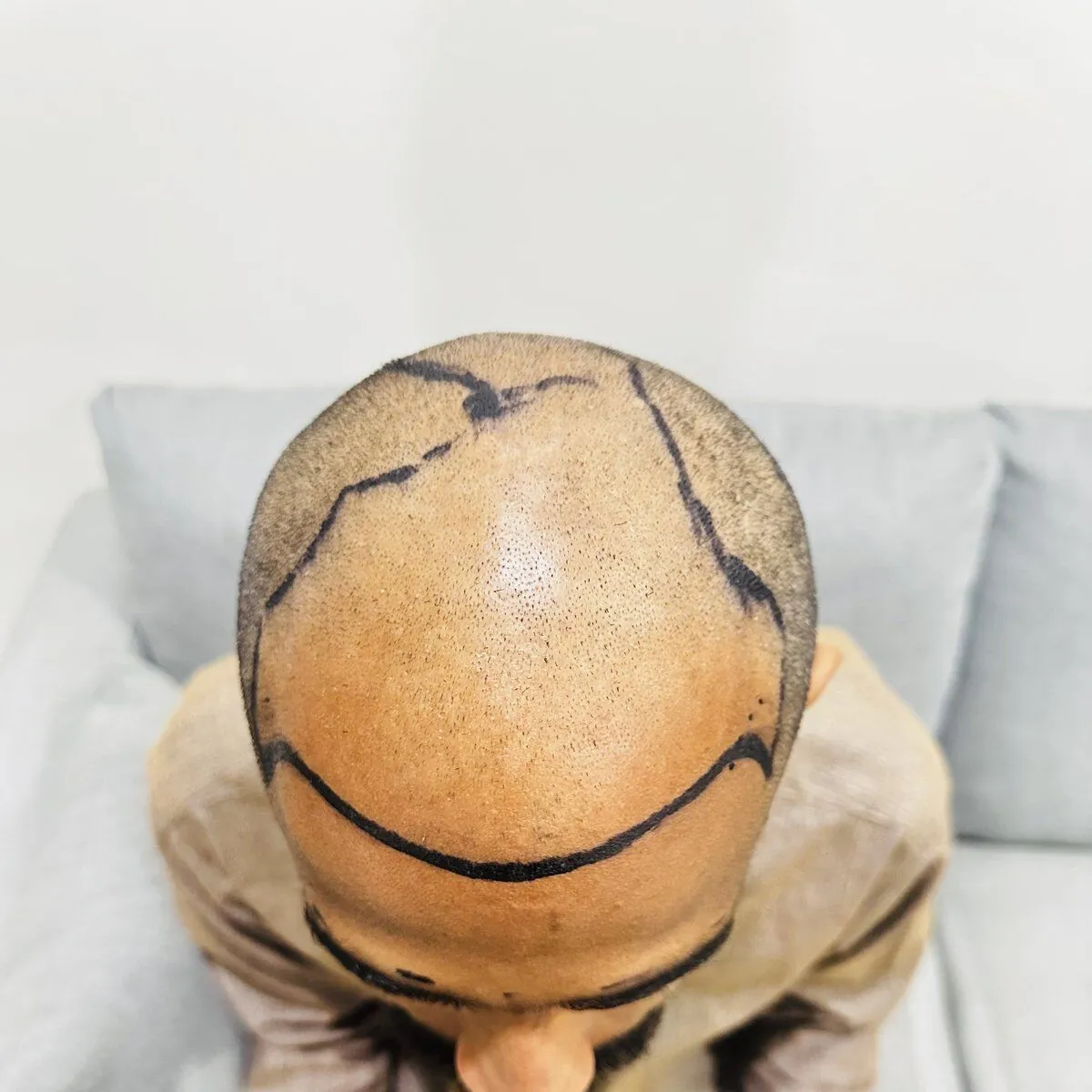
- How far your hair loss has progressed: early recession at the temples is a very different job from a bald top with only a horseshoe of hair left at the sides.
- Your hair character: thick, curly or dark hair can give more visible coverage per graft than fine, straight hair.
- Your donor area: the back and sides of the scalp hold a limited supply. A safe plan never takes more than your donor area can spare.
A bigger number is not automatically better value. Taking too many grafts can leave the back of the head thin and patchy. The hair transplant page has a graft estimator that gives a rough starting figure, and the real number is set at examination.
2. The technique: FUE, FUT, Sapphire FUE and DHI
- FUE: grafts are removed one at a time with a small punch. It leaves tiny dot scars and takes longer for large sessions.
- FUT: a thin strip of scalp is removed and divided into grafts, then the wound is stitched. It can collect a large number of grafts efficiently and leaves one fine line.
- Sapphire FUE: a form of FUE in which the openings for the grafts are made with fine sapphire blades. It changes the instruments used for the openings rather than the way grafts are collected.
- DHI: grafts are loaded into a pen-like implanter and placed directly. It gives close control over angle and depth, but it is slower and needs more handling.
A technique name on its own says little about quality. Ask why a particular method is being suggested for your scalp and what it adds in your case. For a fuller comparison of the two main methods, read FUE vs FUT hair transplant.
3. Who does the work
A hair transplant is a long procedure carried out by a team. What matters is who does the key steps: examining you, designing the hairline, deciding the graft count, making the openings and supervising placement. Some low-cost set-ups rely heavily on technicians, with a doctor present only briefly.
With Dr. Junaid, he assesses you, designs your hairline and plans where every group of grafts will go, supported by his trained clinical team throughout the day. Always ask any clinic who will be doing each part of your procedure.
4. The facility and safety standards
A safe procedure needs a clean, properly equipped room, sterilised instruments, single-use items where appropriate, careful use of local anaesthetic and staff who can respond if something goes wrong. These standards cost money to maintain. They also protect you from infection and other avoidable problems, so they are worth asking about.
5. Aftercare and follow-up
Check what your quote includes after the day of surgery:
- Medicines and any shampoo or lotion for the first weeks
- Help with your first wash and dressing changes
- Follow-up visits, and a review around the one-year mark
- A way to contact the team if you are worried
- PRP sessions, if they are advised, which are often priced separately
6. One session or more
If your hair loss is extensive, the work may be split into two sessions several months apart to protect graft quality and the donor area. If you are young and still losing hair, you may want more work in the future. Ask whether your quote covers one session and what the likely long-term plan looks like.
Why per-graft quotes vary so much
Per-graft pricing looks simple, but two quotes with similar figures can describe very different things:
- Grafts or hairs: some quotes count individual hairs. Because each graft holds one to four hairs, a hair count sounds larger.
- Estimated or actual: a quote made from photos is an estimate. Ask how any difference on the day is handled.
- What is included: consultation, blood tests, medicines, PRP and follow-up may or may not be part of the price.
- “Unlimited grafts” packages: your donor supply is finite, so “unlimited” is a sales phrase, not a medical plan.
- Total versus per graft: a low per-graft figure on an inflated graft count can cost more overall.
Red flags in very cheap offers
Be cautious if you notice:
- A fixed price before anyone has seen your scalp
- Very large graft counts offered regardless of your donor area
- No clear answer about who will operate
- No questions about your health, medicines or previous treatments
- Pressure to pay a deposit quickly or a limited-time offer
- Promises of perfect density or a result that cannot fail
- No written aftercare plan or follow-up
Problems such as an unnatural hairline or an over-harvested donor area can be difficult and expensive to improve, and some damage cannot be fully undone. The checklist on how to choose a plastic surgeon in Pakistan covers what to check before you book.
How to get an accurate quote through an online consultation
- Take clear photos: front, both temples, top, crown, back and sides, in good daylight, with your hair dry and unstyled. A short video helps too.
- Share your history: your age, how long you have been losing hair, family pattern, medicines, health conditions and any previous hair treatments.
- Say what you want: hairline only, the crown, overall density, and the hairstyle you plan to wear.
- Book a video consultation: Dr. Junaid reviews your photos and talks you through a likely graft range, the method that suits you and whether more than one session may be needed.
- Confirm in person: the final plan and written quote are confirmed after he examines your scalp.
The cost guide explains what a written quote includes, and the overseas patients page helps if you are planning a visit to Pakistan.
Talk to Dr. Junaid
If you would like to know what your own hair transplant would involve, send your photos on WhatsApp and book a consultation in Lahore, or by video from another city or abroad. Dr. Junaid will give you an honest view of what is achievable and a clear quote once your plan is set.
This article is general information and not a substitute for a personal medical consultation.
Quick answers
How much does a hair transplant cost in Pakistan?
There is no single price, because the cost depends on the number of grafts, the technique, how much of the work the surgeon does, the facility and the aftercare included. Dr. Junaid gives a personalised written quote after assessing your scalp, either in person or by video consultation with photos.
Is FUE more expensive than FUT?
In many clinics FUE costs more for the same number of grafts, because removing follicles one at a time takes longer. This varies, and the method that suits your donor area and hairstyle matters more than the difference in price.
Why are per-graft prices so different between clinics?
Clinics may count hairs instead of grafts, quote an estimate that changes on the day, or leave out medicines, PRP and follow-up visits. The amount of work done by the surgeon and the standard of the facility also differ. Compare what is included, not just the headline figure.
Can I get a quote before I travel to Lahore?
Yes. Send clear photos of your scalp on WhatsApp and book a video consultation. Dr. Junaid can give you an indication of the likely graft range and method, and the final plan and quote are confirmed when he examines you in person.
About the author
Dr. Muhammad Junaid Fateh
Plastic, Cosmetic & Reconstructive Surgeon (MBBS, FCPS (Plastic Surgery)) seeing patients in Lahore. Read more about Dr. Junaid.