 By Dr. Muhammad Junaid Fateh
· Updated · 6 min read
Key takeaways
- Go to the nearest emergency department first for any deep, heavily bleeding, crushed or numb hand injury.
- A finger that will not bend or straighten after a cut may mean a tendon injury, which is best repaired early.
- Numbness along a finger after a cut can mean a nerve injury, repaired with microsurgery techniques.
- Night-time tingling in the thumb and fingers suggests carpal tunnel syndrome; a finger that clicks or locks suggests trigger finger.
- Splints, hand therapy and following your exercise plan are as important to recovery as the operation itself.
Your hands are small but remarkably complex. A short cut can hide a divided tendon or nerve, and tingling that only bothers you at night can slowly weaken your grip. Knowing when a problem needs urgent care, and when it needs a specialist, can make a lasting difference.
Dr. Junaid Fateh is a plastic and reconstructive surgeon, and hand surgery is one of his core areas. This guide explains the common warning signs.
First: when to go straight to emergency
If you have just injured your hand, go to the nearest hospital emergency department first. Do not wait for a clinic appointment or a WhatsApp reply. Go immediately if you have:
- Bleeding that does not stop after ten minutes of firm pressure
- A finger or part of the hand that has been cut off, partly or completely
- A crush injury, or an injury from machinery such as a fodder-cutter (toka) machine
- An obvious deformity, suggesting a broken bone or dislocated joint
- A deep cut on the palm side of the fingers, hand or wrist, especially from glass or a knife
- A finger that is pale, cold or blue after an injury
- A small puncture from a high-pressure paint or grease gun, even if it looks minor
- An animal or human bite, including a cut on the knuckle from a punch
- A burn, especially an electrical or chemical burn
- A hand that is rapidly becoming swollen, red, hot and very painful, particularly with fever
First aid while you get help
- Press firmly on the wound with a clean cloth and keep the hand raised above your heart.
- Take off rings, bangles and watches straight away, before swelling makes it impossible.
- If part of a finger has been cut off, wrap it in clean, damp gauze or cloth, seal it in a plastic bag and place the bag on ice. Never put the part directly on ice or in water.
- Do not put turmeric, powders, toothpaste, oil or other home remedies into the wound. They raise the risk of infection.
- If the injury looks serious, avoid eating until a doctor has seen you, in case you need an anaesthetic.
Once you are safe and stable, specialist repair can follow.
Tendon injuries
Tendons connect muscles to bones. The flexor tendons on the palm side bend your fingers, and the extensor tendons on the back straighten them.
Signs a tendon may be cut or torn:
- You cannot bend one or both of the end joints of a finger
- At rest, one finger lies straighter than its neighbours
- You cannot straighten a finger or the tip droops
- Movement is weak or painful after a cut
Why timing matters: a cut flexor tendon pulls back into the palm and its ends start to soften. Repair is most straightforward when done early. After a delay, a tendon graft or transfer may be needed.
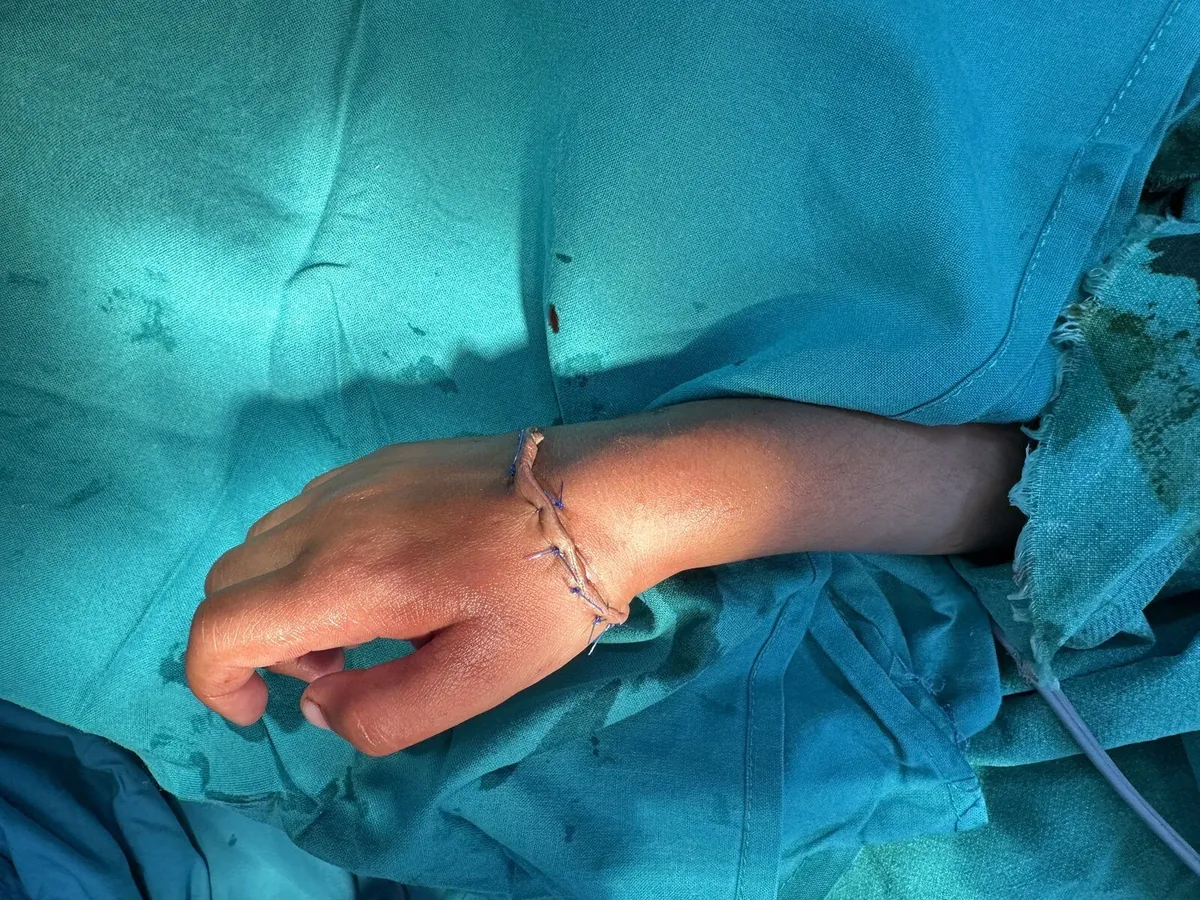
After repair, the hand is protected in a splint for several weeks while you follow a guided exercise plan. Full recovery often takes around three months or more. Stiffness and rupture of the repair are possible risks, which is why hand therapy matters so much.
Mallet finger
A jammed fingertip, for example from a cricket ball, can tear the tendon that straightens the end joint, so the tip droops. It is often treated with a splint worn continuously for several weeks, so see a doctor within a few days.
Nerve injuries
Nerves carry feeling from your fingers and control the small muscles of the hand. The nerves along each side of a finger lie close to the skin and are easily cut.
Signs of a nerve injury:
- Numbness or tingling along one side of a finger after a cut
- Altered feeling, such as the fingertip feeling “thick” or different
- Weakness or clumsiness in the hand
Nerves are repaired under magnification with very fine stitches, using microsurgery techniques. Nerves regrow slowly, so feeling can keep improving for many months, and recovery is sometimes incomplete. Leaving a cut nerve unrepaired risks permanent numbness, which makes it easier to burn or injure the fingertip without noticing.
Carpal tunnel syndrome
Carpal tunnel syndrome happens when the median nerve is squeezed as it passes through a tight tunnel at the wrist. It is not an injury, but it is a very common reason to see a hand surgeon.
Typical symptoms:
- Tingling or numbness in the thumb, index, middle and part of the ring finger
- Symptoms that wake you at night, eased by shaking the hand
- Dropping things, or difficulty with buttons and fine tasks
- In long-standing cases, wasting of the muscle at the base of the thumb
It is more common during pregnancy and in people with diabetes, thyroid problems, arthritis or work involving repetitive gripping.
Treatment options include a wrist splint at night, adjusting activities, a steroid injection and, if symptoms persist, carpal tunnel release. This short operation is usually done under local anaesthetic as a day case.
See a hand surgeon if numbness is constant, you notice weakness or muscle wasting, or symptoms have not settled with a splint. Long-term pressure can damage the nerve permanently.
Trigger finger
Trigger finger happens when a tendon catches in its tunnel at the base of a finger or thumb.
Typical symptoms:
- Clicking or catching when you bend the finger
- A tender lump in the palm at the base of the finger
- Stiffness that is worse in the morning
- A finger that locks bent and needs to be straightened with the other hand
It is more common in people with diabetes. Mild cases may settle with rest or a splint. A steroid injection often helps. If the finger keeps catching or locks, a minor operation under local anaesthetic can free the tendon.
How soon should I be seen?
| What you notice | Possible cause | How soon |
|---|---|---|
| Deep cut and a finger will not bend | Tendon injury | Emergency now, then specialist repair within days |
| Numb strip along a finger after a cut | Nerve injury | Emergency now, then specialist repair within days |
| Hot, swollen, very painful finger or hand | Infection | Emergency, same day |
| Fingertip droops after a knock | Mallet finger | Within a few days |
| Night-time tingling in thumb and fingers | Carpal tunnel syndrome | Routine appointment; sooner if weak or constantly numb |
| Finger clicks, catches or locks | Trigger finger | Routine appointment; sooner if locked |
This is a general guide. If you are unsure, get checked.
Recovery and hand therapy
Keeping the hand raised, wearing splints as instructed and doing your exercises are as important as the operation itself. Smoking slows healing, and good blood sugar control helps if you have diabetes. Recovery times vary widely, and results vary between people.
Like any surgery, hand surgery carries risks such as infection, stiffness, scarring and incomplete recovery of feeling or strength, which Dr. Junaid goes through with you beforehand. Cost depends on the condition and the repair needed; the cost guide explains more.
Talk to Dr. Junaid
For a fresh injury, always go to emergency first. For specialist repair, ongoing symptoms like tingling or locking, or an old injury that has not healed well, send photos, X-rays and reports on WhatsApp and book a consultation in Lahore. You can read more about hand surgery on its own page.
This article is general information and not a substitute for a personal medical consultation.
Quick answers
Should I go to emergency or straight to a hand surgeon after a cut?
Go to the nearest emergency department first for any fresh, deep or heavily bleeding wound, or if a finger is numb, cold or will not move. The emergency team can stop bleeding, clean the wound, give a tetanus injection and arrange X-rays. Specialist repair can follow soon after.
How soon does a cut tendon need to be repaired?
As early as possible, ideally within days rather than weeks. A cut tendon pulls back into the hand over time, which makes a direct repair harder. Older injuries can often still be improved, but usually with more complex surgery.
Will carpal tunnel syndrome go away on its own?
Mild symptoms, especially during pregnancy, sometimes settle with a night splint and time. Symptoms that are constant, getting worse, or causing weakness usually need treatment, because long-term pressure on the nerve can cause lasting numbness.
Is trigger finger surgery a big operation?
Usually not. Trigger finger release is normally a short day-case procedure under local anaesthetic through a small incision in the palm. Many people use the hand for light tasks within days, though full recovery takes a few weeks.
About the author
Dr. Muhammad Junaid Fateh
Plastic, Cosmetic & Reconstructive Surgeon (MBBS, FCPS (Plastic Surgery)) seeing patients in Lahore. Read more about Dr. Junaid.